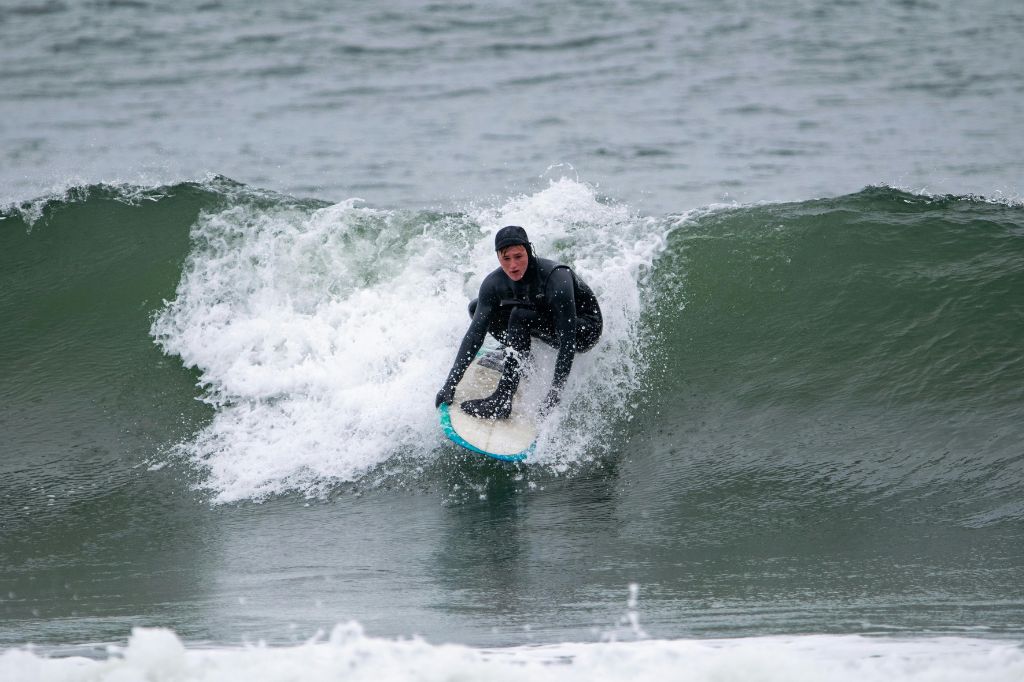
A Weekend in Comporta: Your Perfect Plan! (created…
Planning a weekend in Comporta? Discover my two-day itinerary for…
When I teach surfing, safety does not start when we enter the water.
It starts on the sand.
Before every session, I want to understand what the ocean is doing, who I am surfing with and whether the conditions actually make sense for their level.
Surfing will never be completely risk-free. You are dealing with waves, currents, other surfers and an environment that can change quickly.
But a lot of unnecessary problems can be avoided by making better decisions before you paddle out.
These are the five surf safety habits I think every surfer should build.
Tip | What it means in practice |
1. Check the ocean first | Look at swell, wind, tide, currents and entry/exit points |
2. Surf conditions that match your level | Do not paddle out just because other people are surfing |
3. Use the right equipment | Choose a suitable board, wetsuit and correctly fitted leash |
4. Know how to fall and control your board | Fall flat and away from the board, protect your head and stay aware of people around you |
5. Respect surf etiquette | Understand priority, give people space and do not drop in |
The important thing is that these habits work together. The right equipment will not make unsuitable conditions safe, and knowing surf etiquette will not help much if you cannot comfortably handle the waves you have paddled into.
One of the simplest surf safety habits is also one of the most ignored:
Spend a few minutes watching the ocean before entering.
I do this even at beaches I know very well.
Conditions change. Sandbanks move. Currents appear in different places. A beach that felt easy yesterday can look completely different today.
Before I paddle out, I look at the swell, wind, tide, currents, where the waves are breaking, where other surfers are sitting and where I can enter and leave the water.
Do not rely only on a surf forecast.
A forecast is useful, but what is happening in front of you matters more.
If there are lifeguards on duty, pay attention to the flags and follow their instructions.
At Imagine Surf School, this assessment is part of the lesson before we enter the ocean. We explain the conditions and safety rules on the beach because I want students to start learning how to understand the ocean, not simply follow an instructor into the water.
Ask yourself:
If you cannot answer those questions, spend more time watching or ask someone with local experience.
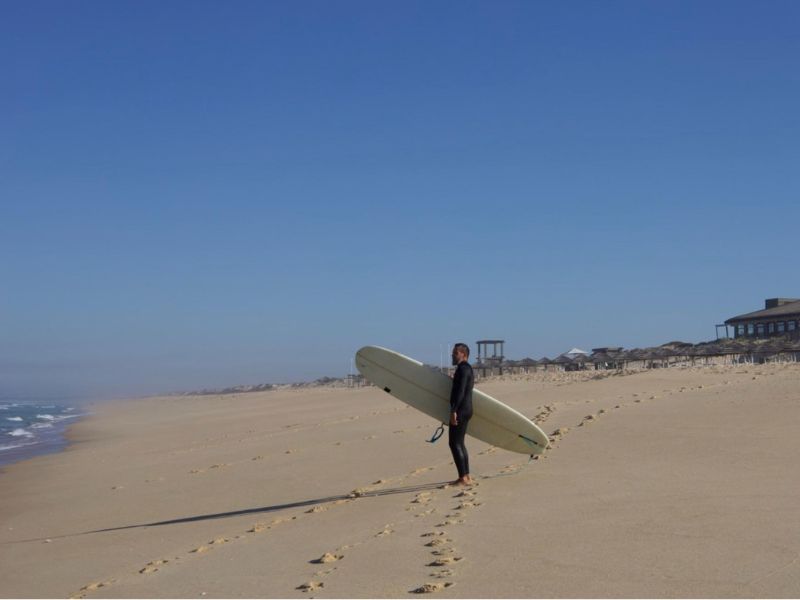
Seeing other surfers in the water does not automatically mean the conditions are right for you.
This is particularly important for beginners.
A confident surfer may be comfortable in waves and currents that are completely inappropriate for someone on their first few sessions.
I would rather surf smaller waves and have control than paddle into conditions where I spend the whole session trying to survive.
And there is no prize for surfing the beach you originally planned to surf.
If the conditions are wrong, choose another spot, wait for the tide to change or leave surfing for another day.
This is also how we organise our surf lessons. We look at the tide, wind, swell and the level of the students before deciding how the session should work.
Most of our lessons take place at Pego Beach, but knowing a beach well also means knowing when not to force a session there.
If you are learning, a qualified instructor can help you understand the difference between conditions that look intimidating but are manageable and conditions that genuinely do not suit your level.
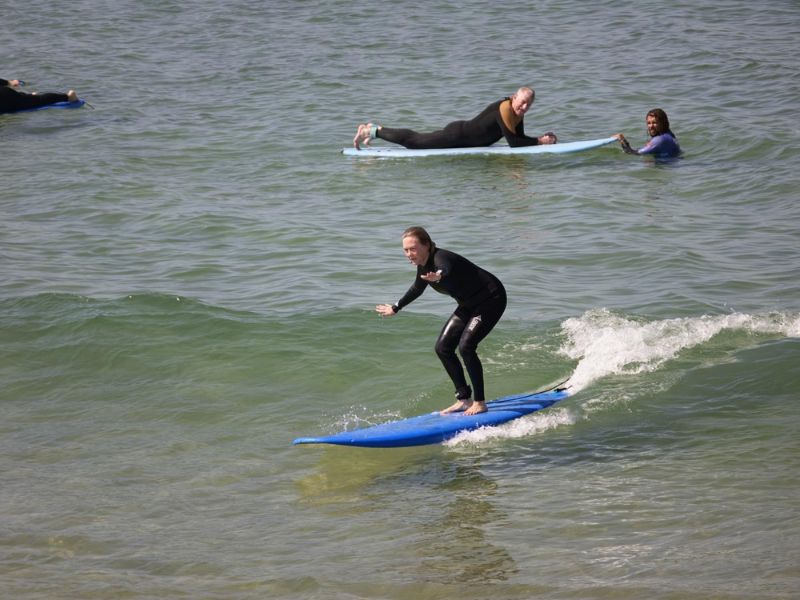
Surf safety is not only about waves. Your equipment matters too.
For beginners, I normally prefer a board with enough volume and stability for the surfer’s size and experience. A board that is too small makes paddling, catching waves and controlling the board unnecessarily difficult.
Your leash also needs attention.
Always use a correctly fitted leash in good condition and check that it is properly attached before entering the water. Your board can provide useful flotation if you get into difficulty, although it should never replace swimming ability or good ocean awareness.
A suitable wetsuit is also important, particularly if you are spending a long time in Atlantic water. Being cold and tired makes good decisions more difficult.
If you already surf independently and only need equipment, you can also check our surfboard and wetsuit rentals. If you are still learning to read the conditions or choose the right equipment, I would recommend getting local guidance first.
At Imagine Surf School, we match the surfboard to the student’s level and size, and our lesson equipment includes a surfboard, wetsuit and leash.
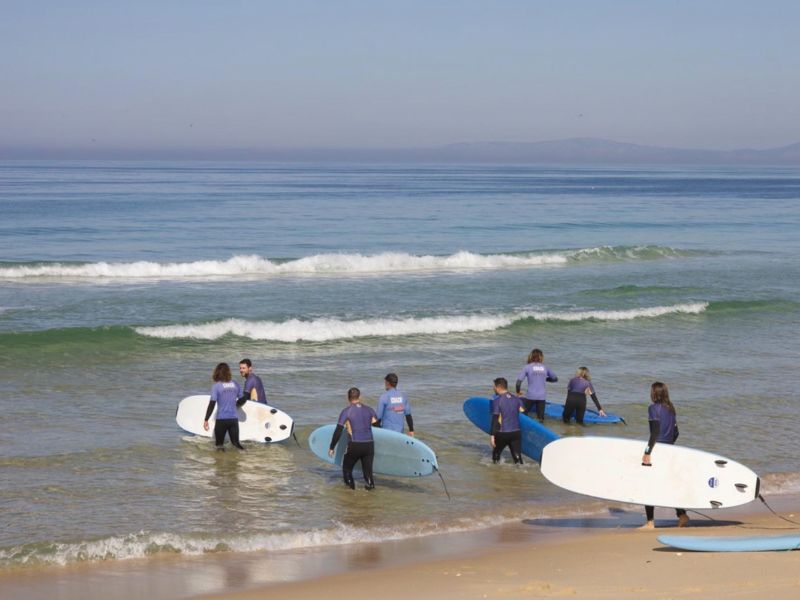
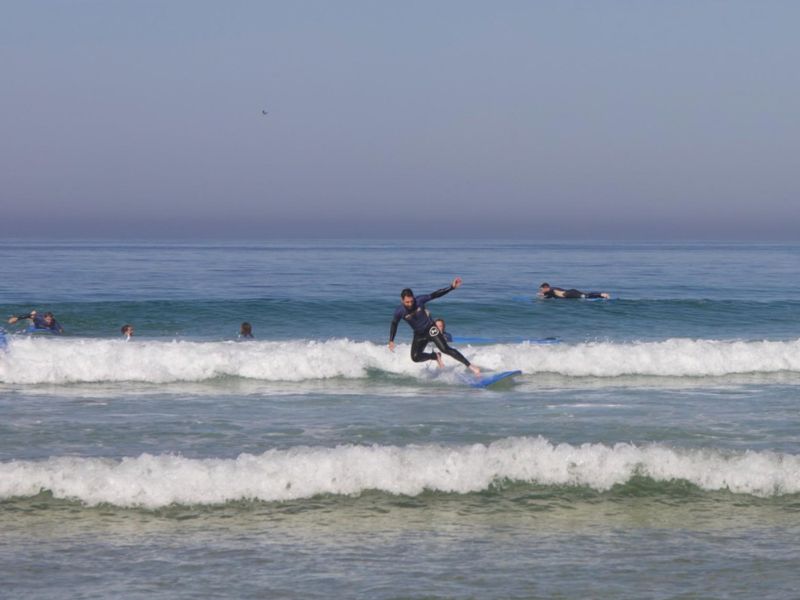
Everyone falls.
Beginners fall. Experienced surfers fall. I fall.
So falling safely is a surf skill in itself.
When I teach someone for the first time, I want them to understand that they do not need to fight every fall.
If you lose your balance, try to fall flat and away from the board rather than diving head-first. Avoid jumping feet-first when you do not know the depth of the water, and protect your head as you come back to the surface.
Then locate your board and look around you.
A surfboard is relatively large, hard and sometimes moving with the energy of a wave. Losing control of it around other people can create more danger than the fall itself.
Keep control of your board whenever it is safe to do so, and always give yourself enough distance from swimmers and other surfers.
This becomes especially important in crowded water.
A useful habit is to think beyond your own fall: if I lose this board now, who is behind me?
That small moment of awareness makes a difference.
Surf etiquette is sometimes presented as something you learn after you become a “real surfer”.
I disagree.
The basics are part of safety from the beginning.
The most important principle is that you are sharing the ocean.
Do not take off if another surfer already has priority on the wave. Do not drop in. Give other surfers space. Avoid paddling directly into someone’s path. And do not enter a crowded lineup if you do not yet understand what is happening around you.
If you are learning in whitewater, leave enough distance between yourself and other beginners too. Beginners tend to lose control of their boards more often, so extra space is useful.
Respect also extends beyond surfers.
Pay attention to swimmers, lifeguards and other beach users, and keep away from designated swimming areas where surfing is not allowed.
For me, learning to surf properly means learning this side of surfing too.
It is not just about standing on the board.
It is about becoming more aware of the ocean and of everyone sharing it with you.
You can learn a lot by watching other surfers, checking forecasts and spending time in the ocean.
But local knowledge can make a big difference, especially when you are surfing a beach you do not know well.
A good instructor can assess the conditions, identify safer entry and exit points, choose the right equipment and explain how the beach is working that day.
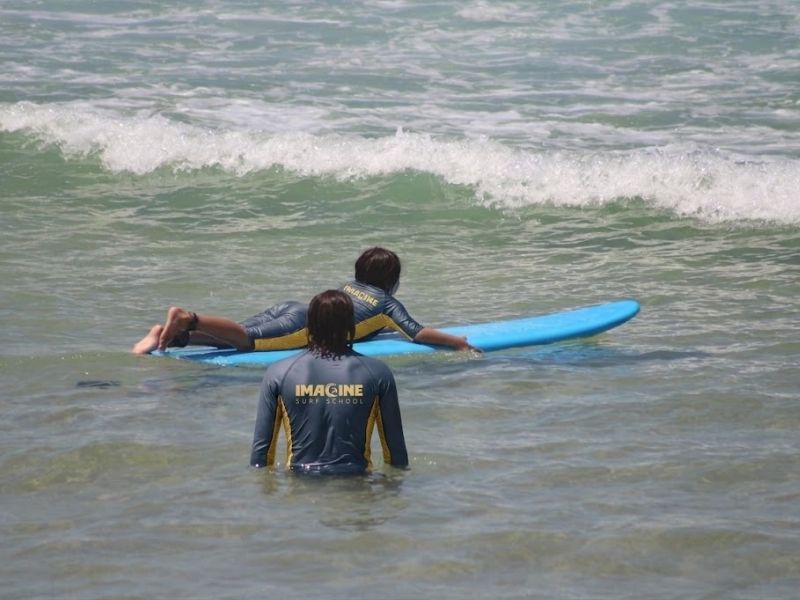
At Imagine Surf School, we work with a team of certified surf instructors and small groups so we can stay close enough to the students to see how they are reacting in the water. Lessons are adapted to the ocean conditions and each person’s level and confidence.
If you are just starting out, our beginner surf lessons combine technical basics with the ocean awareness you need to become more independent over time.
If you prefer closer guidance or feel more comfortable learning at your own pace, our private surf lessons give us more flexibility to adapt the session to your confidence, level and the conditions on the day.
For me, that is one of the biggest benefits of learning with someone who knows the coast well: you are not only learning how to surf, you are learning how to make better decisions in the ocean.
Surfing involves risk, but beginners can reduce that risk by choosing suitable conditions, using the right equipment and learning with qualified supervision. The beach and conditions should always match the surfer’s ability.
If you are a beginner, I would not recommend learning alone. Surf with an instructor or other people, particularly at a beach you do not know. More experienced surfers should also be cautious about surfing isolated spots alone.
In the beach-break conditions most beginners surf, a correctly fitted leash is an important part of the equipment. Check its condition and attachment before entering the water.
Do not paddle out simply because you have already travelled to the beach or planned a surf session. Wait, find a more suitable spot or surf another day.
Knowing when not to surf is part of becoming a better surfer.
The ocean does not need to look dangerous to deserve respect.
Some of the best safety decisions are very small: watching the water for five minutes longer, choosing a bigger board, moving to a quieter section of the beach or deciding that today is not the right day.
I do not think surfing safely means being afraid of everything that can go wrong.
It means paying attention.
Read the ocean. Know your level. Look after your equipment. Give other people space. And be willing to change the plan.
Those habits will help you for much longer than any single technique you learn on a surfboard.

Surf Instructor & Founder of Imagine Surf School
With more than 15 years of experience as a surfer, he created Imagine Surf School, dreaming of making a better world through surfing. For him, it´s more than just riding a wave. It´s a lifestyle. It´s becoming a better human being every day. In his lessons, you will have the opportunity to live and experience a total connection with the sea and with Nature.
Planning a weekend in Comporta? Discover my two-day itinerary for…
Find out what surfing in Portugal is like in winter,…