A Weekend in Comporta: Your Perfect Plan! (created…
Planning a weekend in Comporta? Discover my two-day itinerary for…
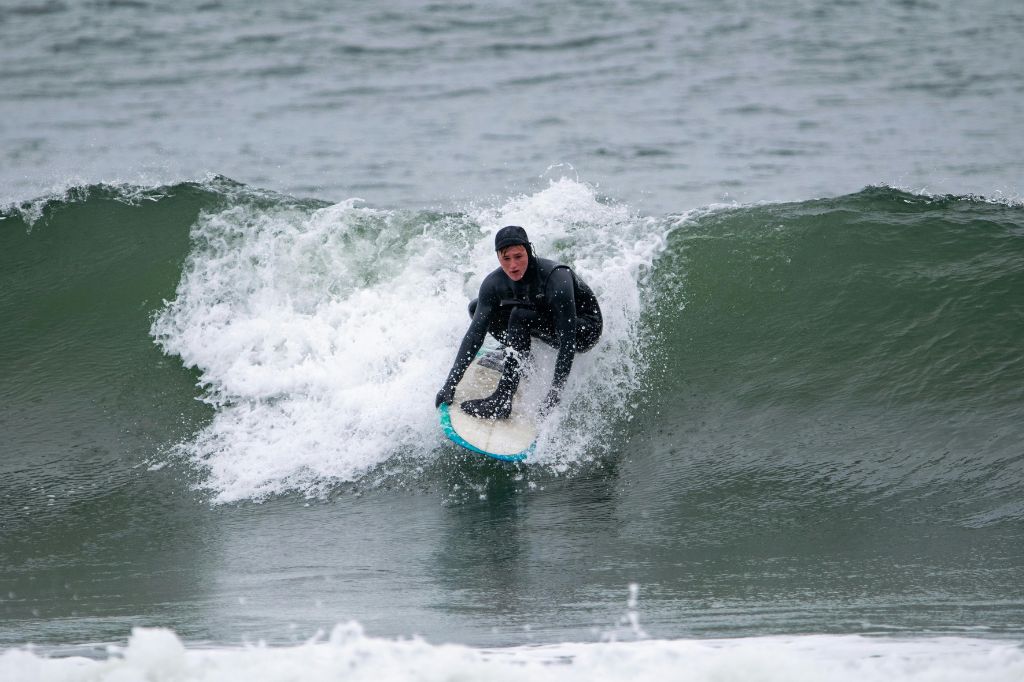
Some people associate surfing exclusively with summer.
I understand why. Warmer water, longer days, fewer layers to put on and that natural urge to spend time at the beach.
But for me, winter reveals a completely different side of surfing in Portugal.
The Atlantic has more energy, many beaches become quieter and the conditions make us pay closer attention to the ocean. We stop thinking only about catching waves and start understanding the swell, wind, tides and the surf spot itself.
It’s also the season when Portugal shows why it has become one of Europe’s best-known surfing destinations. Peniche, Ericeira, Carcavelos, Costa Vicentina and many other areas have waves all year round, with autumn and winter being particularly interesting for those looking for more challenging surf.
But there’s something important to remember:
More waves don’t automatically mean better conditions for you.
Winter surfing means knowing how to choose the day and beach and, above all, respecting your own level.
For me, yes. But it’s a very different experience from surfing in July or August.
In winter, the Atlantic tends to have more energy, so choosing the right spot, time and conditions becomes even more important.
In winter | What it means for you |
More powerful swells | You may encounter bigger, faster and more demanding waves |
Fewer surfers at many beaches | More space, although the most famous spots can still be crowded |
Colder water and air | A good wetsuit becomes essential |
More changeable weather | Keep an eye on the wind, rain and updated forecasts |
Shorter days | Fewer daylight hours to find the best window |
Less lifeguard cover at beaches | You need to take even greater responsibility for assessing the conditions |
There isn’t just one right region.
One of Portugal’s biggest strengths is the variety of its coastline, the different beach orientations and the range of wave types. You can find surf from north to south, with very different spots sometimes relatively close together.
These are the areas I’d look at:
Area | Why it’s interesting in winter | Watch out for… |
Northern Portugal | Many Atlantic-facing beaches and good surf days | Colder water and more demanding conditions |
Peniche / Baleal | Different orientations give you alternatives depending on wind and swell | Supertubos and other spots can become very powerful |
Ericeira | High-quality waves and a strong surf culture | Many breaks are technical and have rocky bottoms |
Carcavelos / Costa da Caparica | Easy access from Lisbon and several alternatives | More people in the water on the best days |
Comporta / Alentejo Coast | Long beaches, a quieter setting and several options nearby | Exposure to Atlantic swell |
Costa Vicentina and Sagres | A great variety of beaches with different exposure to swell | Conditions can become very powerful |
If you’d like to compare these regions in more detail and find out which beaches suit different levels, see my guide to surfing in Portugal: the best beaches, waves and facilities.
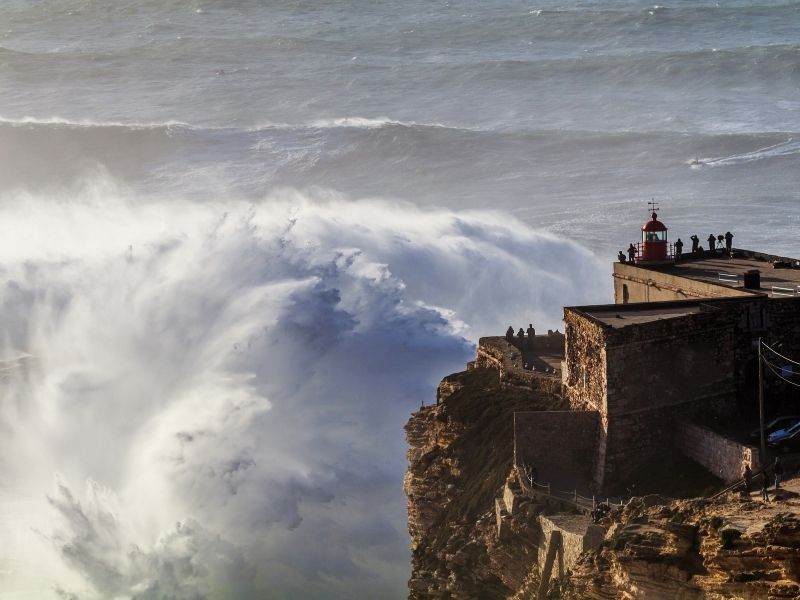
Praia do Norte, in Nazaré, always deserves a mention when we talk about winter surfing in Portugal.
But not because I’m recommending that you go surfing there.
On the biggest winter days, we’re talking about giant-wave surfing undertaken by highly specialised athletes, with dedicated preparation and safety teams. Nazaré is a world-famous destination precisely because of the extreme conditions associated with the Nazaré Canyon.
For most surfers, the best place to be on those days is safely on land, just watching. 🙂
Here, I can speak from personal experience.
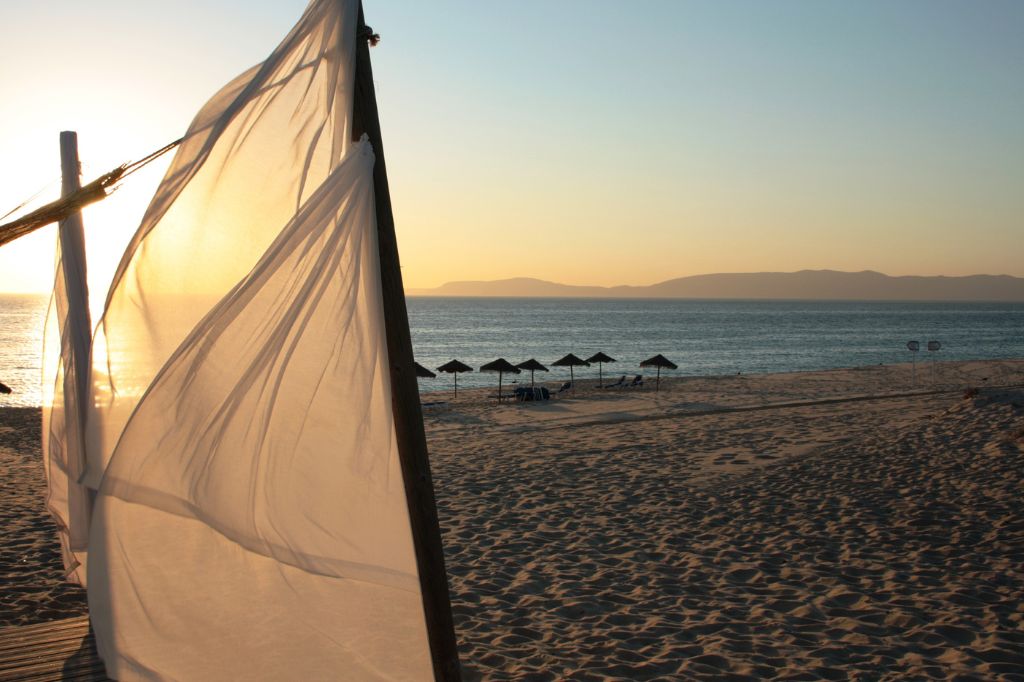
In winter, Pego Beach (Praia do Pego) changes a lot.
There’s less activity, the beach seems even bigger and the ocean feels more present. Some days bring excellent conditions. On others, the best decision is to find another beach or simply stay out of the water.
That’s why I never assume a lesson or surf session will always happen at the same time.
First, I check the forecast.
Then I watch the ocean.
Only then do I decide.
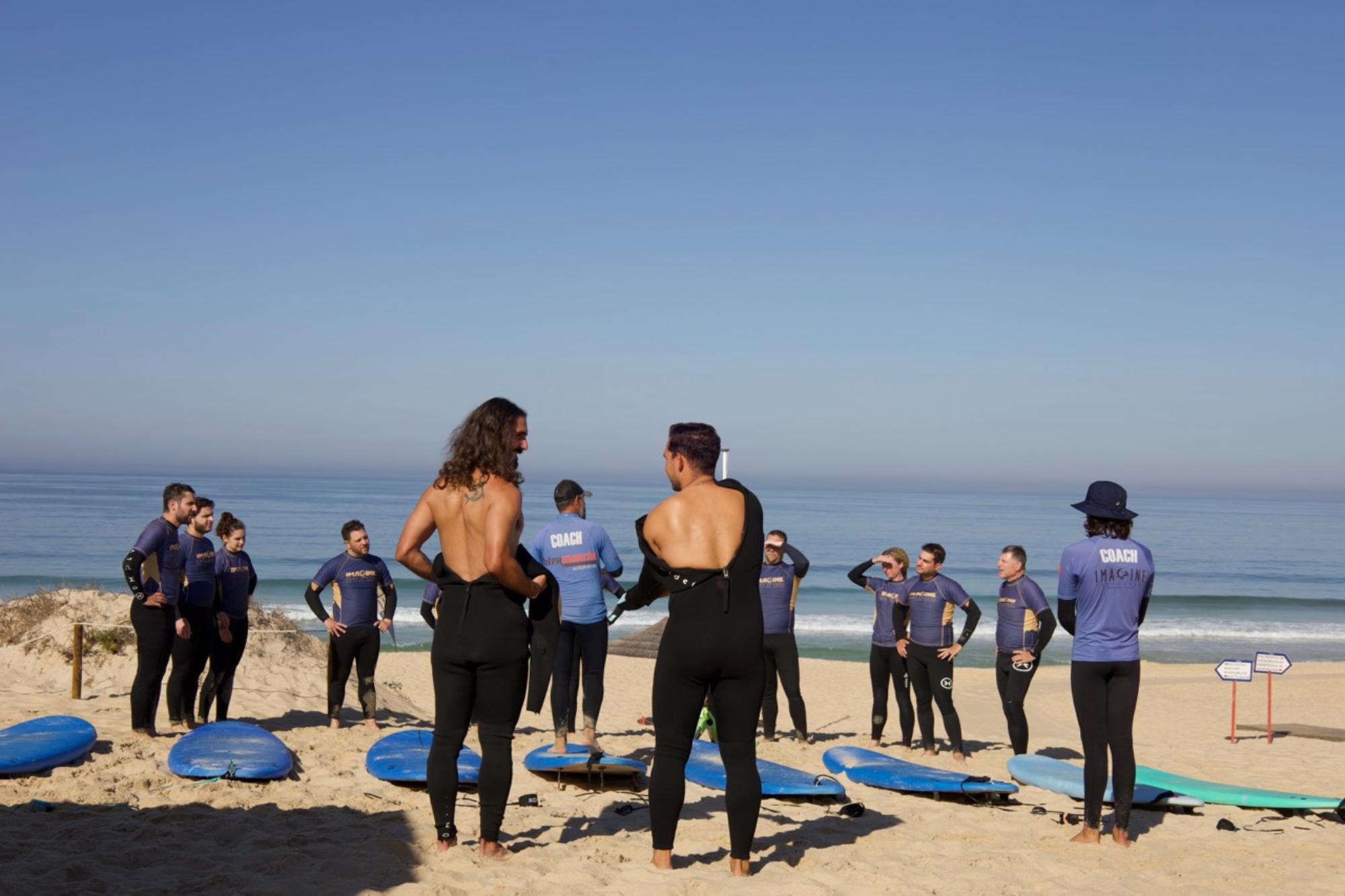
Most of the lessons I teach take place at Pego Beach, but when conditions call for it, I can look for alternatives such as Comporta Beach, Atlantic Beach or Aberta Nova Beach. For our winter surf lessons, we adapt both the time and location to each student’s level and the actual conditions on the day.
If you’d like to understand how surfing works in this region throughout the year, take a look at my complete guide to surfing in Comporta.
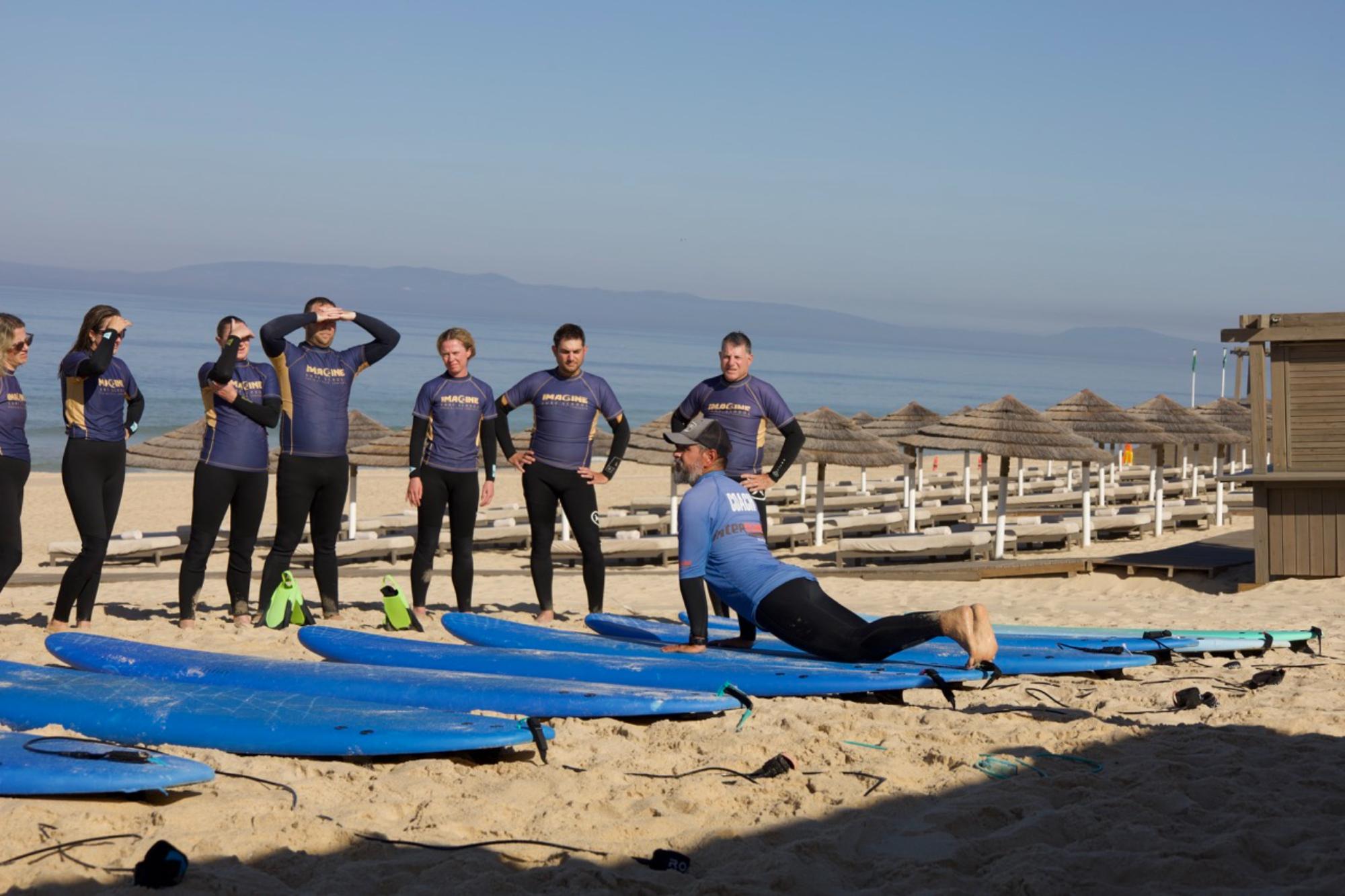
It can be. But I wouldn’t say it’s automatically the best season for every beginner.
In winter, the ocean tends to have more energy, which makes finding conditions suited to your level particularly important.
I teach beginners in winter whenever the sea conditions allow.
And there are some real advantages: generally quieter beaches, close guidance and the chance to start understanding the ocean from the very beginning – rather than just learning how to stand up on a board.
Here’s how I’d sum it up:
Even in summer, you should watch the ocean before going in.
In winter, it’s even more important.
I always check:
✓ Swell height and period – I don’t just look at wave height.
✓ Swell direction – this helps me understand how each beach might respond.
✓ Wind – its direction and strength can completely change a session.
✓ Tide – some spots work much better at certain stages.
✓ Currents and channels – I watch the water for a while before entering.
✓ Entry and exit points – especially at rocky beaches or when the surf is bigger.
✓ Available daylight – it gets dark early in winter.
✓ My level on that particular day – not the level I wish I had.
If you’re looking at the ocean and aren’t sure whether you can handle the conditions, that’s important information in itself.
You don’t have to paddle out just because you’ve driven all the way to the beach.
There will always be another day.
You don’t need to turn your van into a storage room, but a few things can make a huge difference after a cold session.
✓ A wetsuit suitable for the season
✓ A surfboard and leash in good condition
✓ A towel or changing poncho
✓ Dry, warm clothes for after your session
✓ Water
✓ Sunscreen – yes, even in winter
✓ Something to eat after a long session
If you already know how to surf but don’t want to travel with a board and wetsuit, you can also rent surf equipment at Pego Beach. We have boards for different levels and wetsuits available, so you don’t need to bring all your own gear.
I’m not going to say you should never surf alone.
But the more demanding the conditions, the less comfortable I am with the idea.
In winter, you may face bigger waves, stronger currents, fewer people on the beach and, outside the bathing season, many beaches without lifeguard cover.
If you’re surfing somewhere you don’t know, watch the ocean first, identify safe entry and exit points and talk to people who know the beach.
And remember one thing:
An empty beach isn’t necessarily an easy beach.
Understanding the ocean also means knowing when not to surf.
No, as long as you wear suitable equipment. A good wetsuit lets you stay comfortable in the water even during the coldest months. Our winter lessons include equipment suitable for the season.
Yes, when suitable conditions are available. I wouldn’t choose just any beach or any day. For a first experience, I’d particularly recommend professional guidance and a spot that matches the student’s level.
There isn’t just one. Peniche, Ericeira, the Lisbon area, the Alentejo Coast and Costa Vicentina offer very different possibilities. Your choice should depend on the forecast, your level and the type of wave you’re looking for.
No. There are days with small waves, days with big waves and periods without particularly interesting conditions. Winter increases the likelihood of more powerful swells, but no single rule applies to every day.
For me, definitely.
Not because winter is better than summer. It’s simply a different way to experience surfing.
There are incredible days and days when staying on land is the best decision. Learning to tell them apart is also part of being a surfer.
If you’re coming to Comporta, come and find Imagine Surf School at Pego Beach!
First, we check the ocean. Then we make a plan.
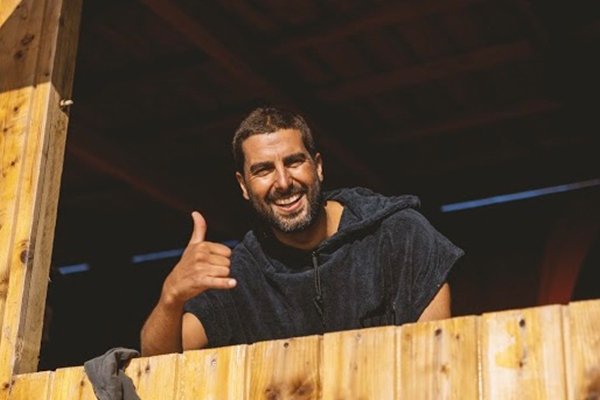
Surf Instructor & Founder of Imagine Surf School
With more than 15 years of experience as a surfer, he created Imagine Surf School, dreaming of making a better world through surfing. For him, it´s more than just riding a wave. It´s a lifestyle. It´s becoming a better human being every day. In his lessons, you will have the opportunity to live and experience a total connection with the sea and with Nature.
Planning a weekend in Comporta? Discover my two-day itinerary for…
Find out what surfing in Portugal is like in winter,…